Everyday contact does not transmit HIV
You do not acquire HIV from sharing meals, glasses, utensils, toilets or workspaces, or from hugs, handshakes, coughing, sneezing or mosquito bites. Ordinary social contact does not require checking someone else’s viral load or knowing their status. [1]
Closed-mouth kissing does not transmit HIV; saliva is not a transmission route. The extremely rare reports concerning deep kissing involve blood, not a rule that every mouth sore makes a kiss an HIV exposure. Ask about an actual blood exposure if one occurred without treating all contact as dangerous. [1]
HIV transmission requires a specific route
HIV can be transmitted when certain fluids reach susceptible tissue or the bloodstream. Relevant fluids include blood, semen, vaginal and rectal fluids and breast milk. Ordinary contact with a person is not an exposure, and not every body fluid transmits HIV. [1]
Major routes include anal or vaginal sex in circumstances without effective protection and sharing needles, syringes or preparation equipment with blood exposure. Chance depends on the actual exposure and prevention in use, not identity, occupation or partner count alone. [1]
Treatment changes sexual transmission
U=U means that a person taking ART who maintains viral suppression meeting care-team criteria does not transmit HIV through sex. It is not a cure, a result from one screening test, or a guarantee for breastfeeding or sharing injection equipment. It does not prevent other STIs. [2]
Viral load measures HIV in someone who has HIV. A higher viral load can increase transmission likelihood; it is not a marker that someone without HIV has a higher chance of acquiring it. Interpret monitoring with a care team rather than changing ART yourself. [1] [3]
Ordinary daily contact does not transmit HIV
Hugging, shaking hands, sharing food, toilets or a home, coughing and sneezing do not transmit HIV. Saliva alone, air, water and mosquito bites are not transmission routes. People do not need viral suppression before being included in daily life. [4] [1]
Oral sex carries little to no HIV risk, unlike common anal or vaginal transmission routes; it can transmit other STIs. Rare blood-related situations are not evidence that ordinary kissing or biting intact skin transmits HIV. A severe bite involving blood needs individual assessment. [1] [5]
Pregnancy, birth, feeding and clinical procedures need context
HIV can be transmitted during pregnancy, birth or breastfeeding. A care team can plan treatment and infant care to reduce transmission. Do not apply sexual U=U as a zero-risk breastfeeding guarantee or blame a parent or caregiver for barriers to services. [4] [1]
Unsafe injections or blood-contaminated equipment can transmit HIV. Use sterile personal equipment and appropriate clinical infection control. Do not use a survival-time figure to decide an old needle is safe, or confuse receiving contaminated blood with donating blood under safe procedures. [1] [6]
Choose prevention and testing without judgment
PrEP is an option before exposure for people without HIV after assessment; suitable products and follow-up differ. Condoms reduce HIV and some STI risks but do not provide absolute protection against every STI. Testing must account for timing and prevention medicines. [7] [8] [9]
Seek PEP assessment as soon as possible after a possible HIV exposure and start when indicated within 72 hours. Do not wait for symptoms, all pending laboratory results or an online appointment. If more time has passed, still seek assessment and a testing plan. Do not substitute PrEP yourself. [10]
HIV is a virus; AIDS is an advanced clinical condition, not a separate virus caught through everyday contact. Treatment can control HIV and support health. Neither a diagnosis nor difficulty attending care is a judgment about character. [4] [11]
Frequently asked questions
Everyday contact does not transmit HIV
You do not acquire HIV from sharing meals, glasses, utensils, toilets or workspaces, or from hugs, handshakes, coughing, sneezing or mosquito bites. Ordinary social contact does not require checking someone else’s viral load or knowing their status. [1]
HIV transmission requires a specific route
HIV can be transmitted when certain fluids reach susceptible tissue or the bloodstream. Relevant fluids include blood, semen, vaginal and rectal fluids and breast milk. Ordinary contact with a person is not an exposure, and not every body fluid transmits HIV. [1]
Treatment changes sexual transmission
U=U means that a person taking ART who maintains viral suppression meeting care-team criteria does not transmit HIV through sex. It is not a cure, a result from one screening test, or a guarantee for breastfeeding or sharing injection equipment. It does not prevent other STIs. [2]
Ordinary daily contact does not transmit HIV
Hugging, shaking hands, sharing food, toilets or a home, coughing and sneezing do not transmit HIV. Saliva alone, air, water and mosquito bites are not transmission routes. People do not need viral suppression before being included in daily life. [4] [1]
Pregnancy, birth, feeding and clinical procedures need context
HIV can be transmitted during pregnancy, birth or breastfeeding. A care team can plan treatment and infant care to reduce transmission. Do not apply sexual U=U as a zero-risk breastfeeding guarantee or blame a parent or caregiver for barriers to services. [4] [1]
Summary
You do not acquire HIV from sharing meals, glasses, utensils, toilets or workspaces, or from hugs, handshakes, coughing, sneezing or mosquito bites. Ordinary social contact does not require checking someone else’s viral load or knowing their status. [1]
ลิงก์และภาพประกอบเดิม
เก็บลิงก์เดิมไว้สำหรับการเข้าถึงข้อมูลประกอบ ไม่ใช้รับรองคำแนะนำทางการแพทย์ ราคา หรือเงื่อนไขปัจจุบัน
ลิงก์ประกอบเดิม 1 ลิงก์ประกอบเดิม 2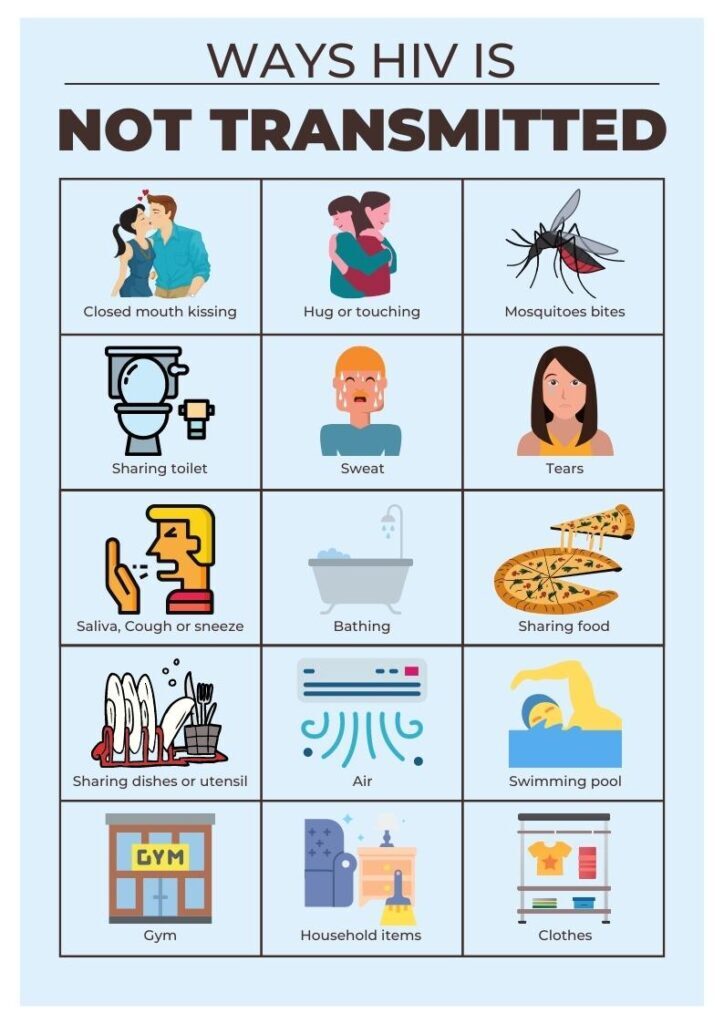
หมายเหตุ บทความนี้ให้ข้อมูลความรู้ทั่วไป ไม่ใช่การวินิจฉัย และไม่ใช่คำแนะนำการใช้ยาเฉพาะบุคคล เรื่องยาและการรักษาเป็นการตัดสินใจร่วมกับแพทย์หรือเภสัชกรที่ดูแลคุณ ไม่ควรซื้อ เริ่ม หยุด หรือปรับยาด้วยตัวเอง หากมีข้อสงสัยเกี่ยวกับสุขภาพของตัวเอง ปรึกษาเจ้าหน้าที่สาธารณสุขหรือคลินิกใกล้บ้านได้เสมอ
อ้างอิงตามข้อความที่ตรวจทาน
- CDC (สหรัฐฯ): ช่องทางถ่ายทอด HIV
- NIH (สหรัฐฯ): U=U และการถ่ายทอดทางเพศสัมพันธ์
- NIH (สหรัฐฯ): การติดตาม Viral Load และ CD4
- WHO (องค์การอนามัยโลก): HIV และ AIDS
- WHO: Sexually transmitted infections, 2025
- CDC NIOSH: Bloodborne infectious diseases and immediate care after sharps exposure
- CDC (สหรัฐฯ): การประเมินและติดตาม PrEP
- CDC (สหรัฐฯ): การใช้ถุงยางและการจัดการเมื่อถุงยางแตก
- CDC (สหรัฐฯ): การตรวจ HIV และช่วงหน้าต่าง
- CDC (สหรัฐฯ): แนวทาง PEP ปี 2025
- NIH (สหรัฐฯ): การช่วยแก้อุปสรรคในการใช้ยาและเข้าถึงการดูแล
ตรวจทานและปรับปรุงเนื้อหา: 29 ตุลาคม 2569